Sixty years of British case-making, finally under one roof In May 2024, Absolute Casing bought Nomad Cases. Here’s what changed — and why it means one phone call instead of three. Read the story Close
Ask anyone who moves expensive kit for a living what the annoying part is, and it’s almost never the cases. It’s the phone calls. One company for the flight cases. Another for the padded bags. A third for the lighter poly cases, if you can find anyone who still makes them.
That’s the bit that changed.
Absolute Casing bought Nomad outright in May 2024 — all of it, in one go. Not a stake, not a merger, not a partnership with a press release attached. Two companies that had spent years competing stopped and started building together.
Ed Franklin owns both. He started Absolute Casing in ’99 on his parents’ farm in Compton, Berkshire, with flight cases still being built there today.
“I bought Nomad because of the presence in the industry and the long standing experience the personnel have — a business of sixty years. It had the padded bag department, which Absolute couldn’t supply, and the poly boxes, which are unique within the industry. I didn’t really buy Nomad for the flight case side of it, because we already had that covered.
What it offered us was to not just be able to sell a high-end, expensive flight case. Now we can offer clients the best solution for their problem; the flight case, the padded bag and the poly — three different price ranges and applications. It’s opened our spectrum, and it’s expanded our production facilities. We can move things around now, and respond to the demand in this industry.”
Ed Franklin, MD, Absolute Group
Two things Absolute couldn’t do before, it can now. Nomad has made custom padded bags for decades — Absolute used to buy those in; now they’re made in-house. And Lite Guard poly cases: only two companies in the UK make them properly, the machinery can’t be bought any more, and Nomad has six of those vintage machines.
So the answer to a customer is no longer one thing. It’s a flight case, a padded bag, a Lite Guard poly, or some combination of the three — three price points, three levels of protection. Asked why that’s better for the customer, Ed’s answer was one word: ‘budget’. Not everything needs a two-grand case. And it’s the same three questions whether the kit is going out with one of the biggest touring artists in the world, a Formula One team, a broadcast flypack, or an endoscopy stack bound for a hospital: how hard does it need to be, how light does it need to be, and how fast do you need it.
What went the other way matters just as much. Nomad, in Market Harborough, arrived with sixty years of skill and not a great deal to run it on — a small design team, no CAD, and almost everything cut and built by hand. Absolute put a bigger design team in and CNC machines on both sides of the building, fabric for the soft goods and woodworking for the cases; seven across the group now. What didn’t change was who stands at the benches. Most of the key staff have been there over forty years. The machinery got modernised; the hands didn’t.
When the industry hits its annual panic and everything is needed yesterday, work moves between the sites instead of joining a queue.
Here’s the part most people don’t know. Nomad has been doing this for sixty years. It started in 1961 making work boxes for the shoe and textile trade. Since then it has taken in The Enfield Box Company, founded in 1929. Custom Cases, 1975. The fabrication side of Excelsior Containers. CF Cases, 1980. Adda Supercases, 1978 — the people who invented the DJ record case. And, weeks before Absolute bought Nomad, Dragon Cases.
So Absolute Casing didn’t buy one company in May 2024. It bought the best part of a century of British case-making that had already been quietly gathered into one place. Absolute Group is simply the roof that finally went over all of it.
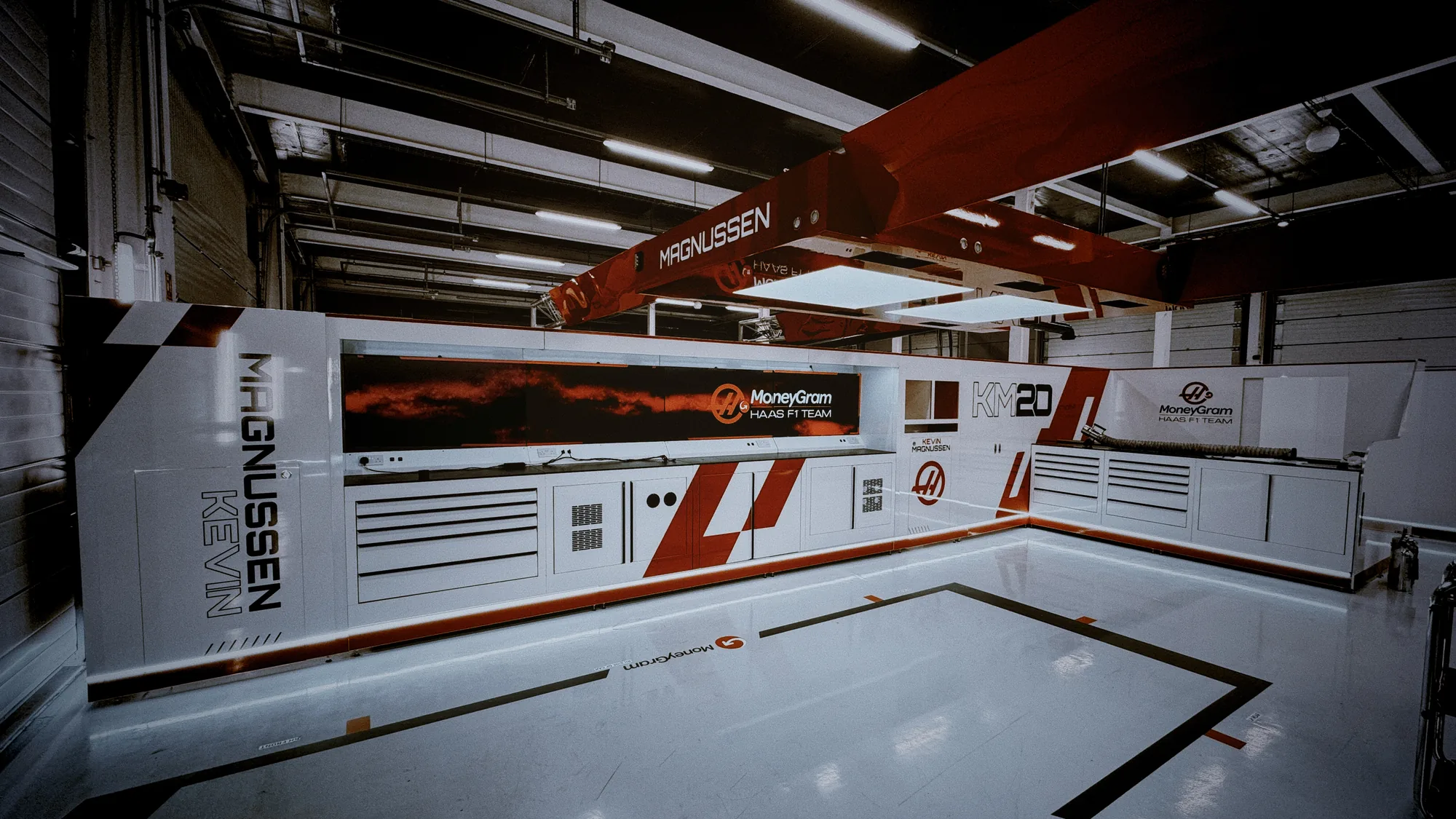
And the newest company under it wasn’t bought at all. In October 2025, Ed and Ryan Wood — a customer of Absolute’s for years before he was a partner in it — started Nomad Walling to build bespoke pit garage walling for the motorsport paddock. Ryan brought fifteen years in that world and a clear idea of what the paddock had been putting up with; Absolute brought the case-making.
“I’d had years in the paddock and I knew it could be done better — a better product, at a better price, with a more personal service behind it. And partnering with Nomad and Absolute means we control the product from start to finish instead of relying on other people. It’s just an easier process for the customer.”
Ryan Wood, Director, Nomad Walling
One number to ring. One design team. One supplier for the hard, the soft and the awkward thing in between — still built here, in the heart of England, in an industry where most protection now arrives in a container.